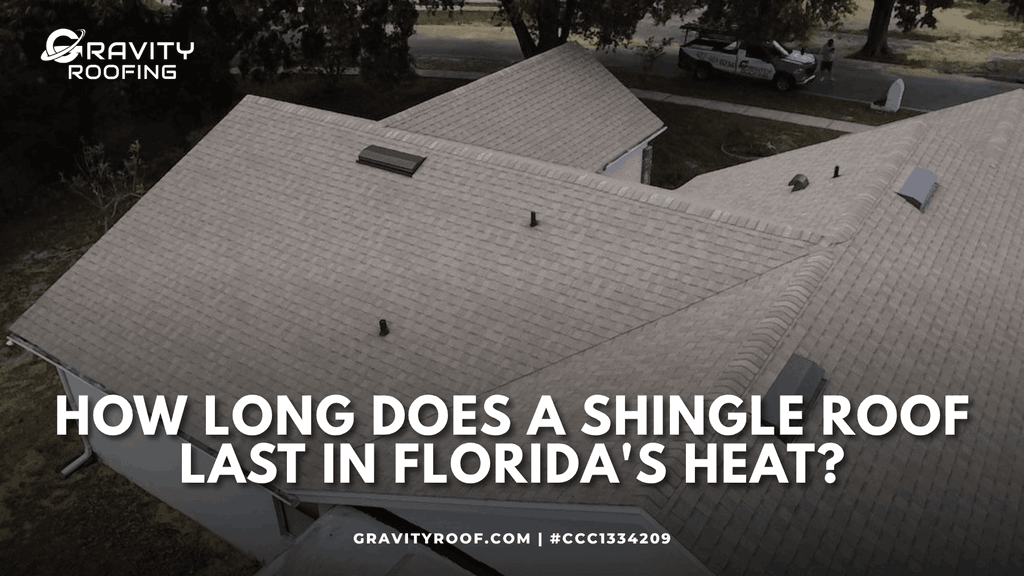
“How long does a roof last in Florida?” is one of the most common questions Central Florida homeowners ask, and the honest answer is that it depends on your roof, not your ZIP code. Material, the specific product, how it was installed, attic ventilation, maintenance and storm history all change the number. Whether you live in Orlando, Kissimmee, Sanford, Clermont, DeLand or The Villages, the climate is broadly the same. What differs is the roof over your head.
Quick answer: Every roof system has a typical service life, but Florida’s sun, humidity and storms test all of them, and installation quality and upkeep matter as much as the material. The more useful question is how much life your roof has left. A professional inspection answers that. And because Florida insurance rules look at roof age, it’s worth knowing your roof’s age and condition before your policy renews.
Why “average lifespan” charts don’t answer the question
You’ll find plenty of charts online that give a single number for each roofing material. They’re a starting point at best, for three reasons:
- Warranty length isn’t service life. A manufacturer’s warranty describes what the manufacturer covers and under which conditions. It isn’t a promise that the roof will last that long in every climate, and coverage terms differ by product and by installer.
- National averages ignore local conditions. A roof in a mild, dry climate ages differently from one that bakes in Central Florida sun and gets soaked by afternoon storms for months at a time.
- Installation and ventilation can matter as much as the material. A good product installed poorly, or over a hot, poorly ventilated attic, can wear out early.
So instead of trusting one number, look at what’s actually aging your roof.
What shortens a roof’s life in Central Florida
Sun and heat
Strong UV and high roof temperatures slowly dry out and break down roofing materials, sealants and rubber pipe boots. On asphalt shingles, that shows up as curling, cracking and granule loss over time.
Humidity and algae
Moist air, shade and overhanging trees feed algae streaks and keep some roof slopes damp longer. Streaks are often cosmetic at first, but trapped moisture and debris can shorten the life of the surface. Our guide to black streaks on your roof explains safe cleaning options.
Storms and hurricane season
The Atlantic hurricane season officially runs from June 1 to November 30, and summer thunderstorms bring gusty winds and heavy rain on top of that. Each event can lift shingles, loosen flashing or crack tiles. Storm damage that goes unnoticed can make a roof age faster than it should. See roof damage after a storm for what to look for.
Ventilation and attic heat
An attic that can’t vent heat and moisture puts extra stress on the roof deck and roofing materials from below. Balanced intake and exhaust ventilation is part of a healthy roof system, not an add-on.
Flashing, penetrations and deferred repairs
Many roofs don’t fail across the whole surface. They fail at the details: flashing at walls and chimneys, pipe boots, skylights and valleys. Leaving a small leak alone lets water reach the deck, and wet decking shortens the life of everything above it. Learn more about roof flashing and roof valleys.
How the main roof systems age
Every system wears differently. Here’s what to watch on each, in plain terms:
- Asphalt shingles. Watch for curling, cracking, missing tabs and heavy granule loss in gutters. Gravity installs CertainTeed Landmark and Landmark PRO shingle systems; see shingle roofing.
- Metal. Standing seam panels hide their fasteners, while exposed-fastener panels such as Ultra Rib, 5V and PBR have screws through the panel face that should be checked periodically over the years. See metal roofing.
- Concrete tile. The tiles themselves are only part of the system. The underlayment beneath them does much of the waterproofing and wears out over time, even when the tiles look fine. Broken or slipped tiles need prompt attention. See tile roofing.
- Stone-coated steel. Check trim, flashing and any areas where the stone-chip coating has been scuffed. See stone-coated steel roofing.
- Flat and low-slope sections. Ponding water, open seams and failed edge details are the usual problems on porches, lanais and additions. See flat roofing.
If you’re choosing a new roof and want to compare systems for Florida conditions, read our guide to the best roofing material for Florida’s climate.
How to tell how much life your roof has left
- Find the roof’s age. Check your home purchase paperwork, previous inspection reports, insurance documents or permit records for the last full replacement.
- Look from the ground. Curling or missing shingles, cracked or slipped tiles, rust or loose trim on metal, sagging areas and heavy granules in gutters are all worth noting. Don’t climb on the roof.
- Check the attic. On a sunny day, look for daylight through the deck, water stains around nails or along valleys, and damp or matted insulation.
- Get a professional inspection. A roofer can check flashing, penetrations, fastening and the deck, and give you a realistic view of remaining life with photos. Here’s what to expect from a professional roof inspection.
Roof age and Florida homeowners insurance
Roof age matters for more than repairs. Under Section 627.7011, Florida Statutes, an insurer may not refuse to issue or renew a homeowner’s policy solely because the roof is less than 15 years old. For a roof that is at least 15 years old, the insurer must let you have the roof inspected by an authorized inspector, at your expense, before requiring replacement as a condition of coverage. If that inspection shows the roof has 5 years or more of useful life remaining, the insurer may not refuse to issue or renew solely because of roof age.
The statute also explains how age is counted: from the last date the entire roof surface was built or replaced under the building code in effect at the time. That’s one reason to keep your replacement permit and paperwork.
Florida also requires home insurers to offer discounts or credits for verified wind-mitigation features, including roof covering performance and roof-to-wall strength (Section 627.0629, Florida Statutes). These features are documented on the state’s Uniform Mitigation Verification Inspection Form. Ask your agent how your roof is being rated and whether a new wind mitigation inspection could help. For claims after storm damage, see our roof insurance claim guide.
How to help your roof last longer
- Inspect on a schedule. Have the roof checked before hurricane season and after major storms. Our hurricane roof prep guide covers what to do before a storm.
- Keep water moving. Clear gutters, downspouts and valleys, especially under trees. See gutters during heavy rain.
- Trim trees. Branches that rub or overhang the roof wear the surface and drop debris that holds moisture.
- Fix small problems early. A cracked pipe boot or loose flashing is a small repair. Ignored, it becomes wet decking.
- Don’t pressure-wash. High pressure can damage roofing materials. Use a gentle cleaning method suited to your roof type.
- Consider scheduled maintenance. Our roof maintenance service is built around Central Florida conditions.
When it’s time to plan a replacement
If leaks keep coming back, damage is spread across the roof, or the deck feels soft, you’re likely nearing replacement rather than repair. Read the 7 signs it’s time for a new roof, compare roof repair vs. replacement, and see what drives roof replacement cost so you can budget ahead instead of reacting after a storm.
Frequently asked questions
Does a roof last longer in some Central Florida cities than others?
The regional climate is broadly similar across Orange, Seminole, Osceola, Lake, Volusia, Polk and Sumter counties. Differences in roof life come mostly from the individual home: shade and trees, roof pitch and orientation, attic ventilation, installation quality and how quickly problems get fixed.
Is my roof’s warranty the same as its lifespan?
No. A warranty is a coverage agreement with conditions and limits. Ask your contractor to explain, in writing, the manufacturer warranty that applies to your roof and their own workmanship commitment.
Does my insurer require a new roof at a certain age?
Florida law limits refusals based solely on roof age for roofs under 15 years old, and gives owners of older roofs the right to an inspection before an insurer requires replacement. Your policy and insurer decide the details, so ask your agent.
Can an inspection tell me how many years my roof has left?
An inspection can’t give a guaranteed date, but it can document the roof’s condition, identify problems that shorten its life, and help you plan repairs or replacement on your timeline.
Find out how much life your roof has left
We’ll inspect your roof, show you photos of what we find and give you a straight answer on repair, maintenance or replacement.