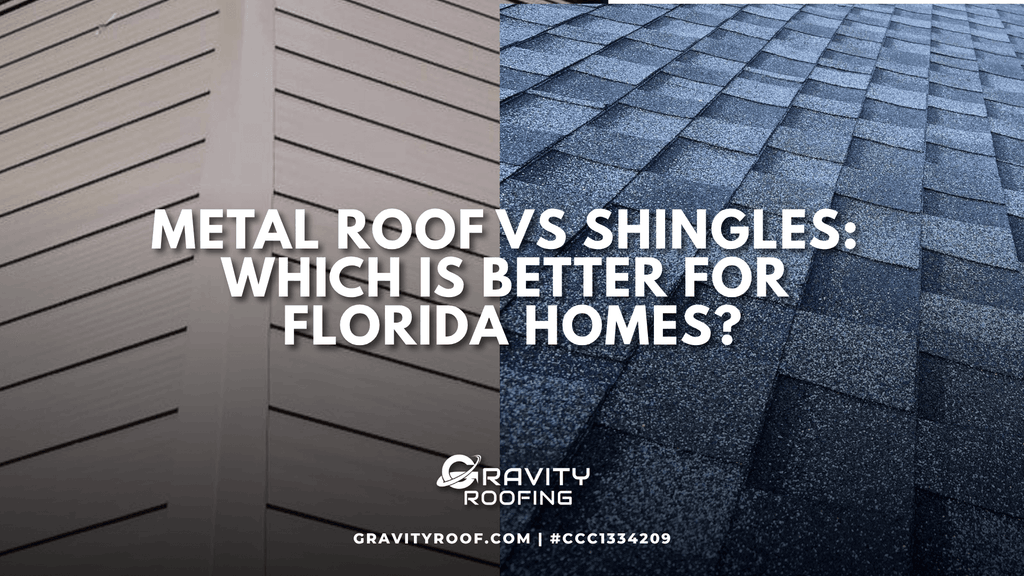
Metal roof vs. shingles is one of the biggest decisions Central Florida homeowners face when it’s time for a new roof. Both can be good Florida roofs when they’re the right product, installed to code. The better choice depends on your budget, how long you’ll stay in the home, the look you want, what your HOA allows and how much upkeep you’re willing to do. This guide compares the two honestly, without the inflated claims you’ll see in a lot of roofing ads.
Quick answer: Architectural shingles usually cost less upfront, come in many colors and are widely accepted by HOAs. Metal usually costs more upfront and appeals to long-term owners who want a clean look and lower upkeep. Neither is automatically “stronger” in a storm: performance depends on the specific approved product and how it’s installed. Get both options priced on your actual roof and compare the full scope, not just the material.
Metal vs. shingles at a glance
| Factor | Architectural shingles | Metal (standing seam or exposed fastener) |
|---|---|---|
| Upfront cost | Usually lower | Usually higher; standing seam is typically the premium option |
| Look | Classic, many colors | Modern or farmhouse lines, many colors |
| Upkeep | Watch for granule loss, curling and algae streaks | Check trim and flashing; exposed fasteners need periodic checks |
| Heat | Lighter colors absorb less heat | Lighter, reflective finishes reflect more of the sun’s heat |
| HOA acceptance | Widely accepted | Check your HOA rules first |
| Repairs | Individual shingles can be replaced | Panel repairs depend on the system and profile |
Cost: what really drives the price
We don’t publish one “average price,” because a number that’s wrong for your home sets the wrong budget. These are the factors that move the cost of either system:
- Roof size and complexity. Hips, valleys, dormers and steep pitches add labor and trim, and metal trim work on a cut-up roof adds up quickly.
- The system. Exposed-fastener metal panels such as Ultra Rib, 5V and PBR typically cost less than standing seam. Within shingles, product lines differ too.
- Tear-off and decking. Removing old layers and replacing rotted decking applies to both.
- Underlayment, flashing and ventilation. These details protect the roof and are part of a proper scope for either material.
- Permits and inspections. In the City of Orlando, a roof replacement needs a building permit, and the re-roof application lists the Florida Product Approval numbers for the products used.
For a ballpark on your own roof, try our instant online estimate, which shows preliminary pricing for different systems. For more on budgeting, read what drives roof replacement cost.
Lifespan and maintenance
Owners who choose metal often do so for lower upkeep and a longer replacement cycle, while shingles trade that for a lower upfront cost. Actual service life depends on the specific product, installation quality, ventilation and maintenance, so ask your contractor what to expect from the exact system you’re quoted, and get the warranty explained in writing.
- Shingles: keep gutters and valleys clear, watch for granule loss and lifted tabs after storms, and address algae with a gentle cleaning method.
- Metal: keep debris off the panels, check trim and flashing after storms, and on exposed-fastener systems, check screws and washers periodically.
See how long a roof lasts in Florida for what ages each system.
Wind, storms and Florida code
You’ll see big wind-speed numbers in roofing ads for both materials. Treat them carefully. In Florida, roofing products are covered by the state’s product approval program, and a roof’s real-world performance depends on the approved product being installed the way its approval and the building code require: fastening, underlayment, edge metal and flashing. Ask any contractor which product approval applies to the system they’re quoting and how they’ll install it.
For insurance, Florida requires home insurers to offer discounts or credits for verified wind-mitigation features, including roof covering performance and roof-to-wall strength (Section 627.0629, Florida Statutes). After any replacement, ask your agent whether a new wind mitigation inspection could change your premium.
Heat, comfort and noise
In Central Florida’s sun, color matters. Lighter, more reflective roof colors generally absorb less heat than dark ones, on both metal and shingles. Attic ventilation and insulation play a big role in how hot your home feels, too.
Rain noise is a common question about metal. The decking, underlayment and attic space below the panels all affect how a roof sounds, so ask your contractor how the assembly on your home is built and what to expect.
Looks, HOAs and resale
Shingles are familiar and widely accepted by HOAs, with plenty of colors to match any style. Metal gives a clean modern or coastal-farmhouse look, but some HOAs restrict it or limit colors and profiles. Always check your HOA’s rules before deciding. If you may sell in the next few years, think about what buyers in your neighborhood expect.
Can you put metal over shingles?
Sometimes, depending on the roof’s condition, the system and code requirements, but it hides the deck from inspection. Read can you put a metal roof over shingles before you decide.
Questions to ask before you sign
- Which exact product line and color are you quoting, and what is its Florida Product Approval number?
- Will the old roof be torn off, and how is rotted decking priced if you find it?
- What underlayment, flashing and edge metal are included?
- Who pulls the permit and schedules inspections?
- What manufacturer warranty and workmanship commitment apply, in writing?
Which is right for your home?
- Shingles may fit best if you want the lowest upfront cost, may sell in the next several years, or your HOA prefers a shingle look.
- Metal may fit best if you plan to stay long term, like the look, want lower upkeep and your HOA allows it.
- Not sure? Price both on your actual roof, compare full written scopes and warranties, and decide with real numbers in hand.
Still weighing other options like tile or stone-coated steel? Compare all of them in our guide to the best roofing material for Florida’s climate.
What Gravity installs
Gravity installs CertainTeed Landmark and Landmark PRO shingle systems, and CertainTeed lists Gravity Roofing as a ShingleMaster contractor since 2024. On metal, Gravity installs Tri-County Metals TCM-LOK standing seam and exposed-fastener panels including Ultra Rib, 5V and PBR. Learn more on our shingle roofing and metal roofing pages, and if you need to spread out the cost, see our Pay Your Way options. Gravity is not the lender, so check current terms with the provider.
Frequently asked questions
Is a metal roof worth it in Florida?
For many long-term owners, yes, because of its look and lower upkeep. For others, shingles are the smarter use of the budget. It depends on how long you’ll stay, what you want to spend now and what your HOA allows.
Does a metal roof lower insurance in Florida?
Insurers must offer discounts or credits for verified wind-mitigation features, and the roof covering is one of the features considered. The actual effect depends on your insurer and your home, so ask your agent.
Is metal hotter or cooler than shingles?
Color and finish matter more than the label. Lighter, reflective finishes reflect more of the sun’s heat on either material, and ventilation and insulation affect attic temperatures.
Which handles hurricanes better?
Both can perform well when the approved product is installed to Florida code. Focus on the specific product approval, fastening and edge details in your quote rather than headline wind numbers.
Compare both on your roof
Our team will walk you through shingle and metal options for your home, HOA and budget, without pressure.